Introduction
When people talk about a CRM implementation, it’s easy to fall into the trap of thinking it’s just about software – choosing the right platform, setting up fields, automating workflows. That’s part of the work, but it’s not the heart of the matter.
Optimizing Customer Experience (CX) in a CRM project means putting the customer’s perspective first, and making the technology serve human outcomes, not just system requirements.
Let’s unpack that in plain language.
Customer experience isn’t a feature in a product. It’s the memory customers take away from every interaction with your company, from the first time they hear about you, to their first purchase, to the support they receive afterward.
A CRM can help standardize data and automate tasks, but optimizing CX means using that system to ensure those moments feel smooth, predictable, and meaningful.
In other words, it’s not enough for the system to work; the experience has to feel effortless and human.
Start with the Customer Journey, Not the Software Tool
Optimizing CX means understanding how customers move through your business. What are their expectations at each step? Where do they get confused? Where do they get delighted?
A CRM, whether Salesforce Sales Cloud, Service Cloud, or another solution, should reflect this journey by mapping each touchpoint so your teams can respond faster, with more context and fewer surprises for the customer.
For example:
-
If customers frequently call with the same question, is there a way to capture that interaction in Salesforce and make it visible across teams?
-
If repeat purchases are important, can your CRM dashboards highlight patterns that lead to loyalty?
Understanding the journey first means your CRM configurations support real experiences, not abstract processes.
Design for Consistency and Context
Customers expect consistency. That’s why optimizing CX in CRM isn’t about forcing every team into a rigid process; it’s about ensuring every team has the same context when interacting with a customer.
Imagine a customer calls support after speaking to sales. If support doesn’t see the notes from the sales conversation, the experience feels broken. If they do, the customer feels understood.
A well-designed CRM creates a single source of truth for customer interactions, so every reply feels informed and every action feels intentional.
Make It Easy for Your Teams to Deliver Better Experiences
Customer experience has a hidden partner: employee experience.
If your teams struggle with the CRM – it’s slow, confusing, or disconnected – that friction shows in every customer interaction.
When your employees feel supported by the system, it shows in the experience customers receive.
Use Data to Be Relevant, Not Just Reactive
Modern customers don’t want generic interactions. They want relevance. They want to feel like your company knows them.
A CRM becomes more than a repository when it helps you:
-
Recognize patterns in behavior.
-
Personalize communications based on real needs.
-
Anticipate customer questions before they’re asked.
This doesn’t mean big data for its own sake. It means using the right signals – data that helps you serve the right message at the right moment.
Measure What Matters to the Customer
Many CRM implementations focus on internal metrics – adoption rates, workflow completion, and data cleanliness. Those are important.
These human-centric indicators show whether the system truly improves the experience or just the internal scorecard.
Build a System That Grows With Your Customers
Optimizing customer experience isn’t a one-time deliverable in a project plan; it’s an ongoing mindset. A CRM should be flexible enough to adapt as your relationships deepen and your business changes.
A well-designed CRM becomes a living system that continuously supports better interactions, smoother processes, and stronger customer relationships.
The Bottom Line
Optimizing customer experience in a CRM implementation, whether on Salesforce or another platform, means looking beyond features and asking a simple question:
How can this system help our teams make every customer interaction better, more informed, and more human?
A CRM is powerful not because it collects data, but because it helps you use that data to build meaningful connections. When Salesforce is designed around real customer journeys and supported by aligned processes and teams, it becomes a driver of trust, loyalty, and growth.
At asUgo, we help organizations turn Salesforce implementations into customer-centric transformations, where technology supports experience, not the other way around.
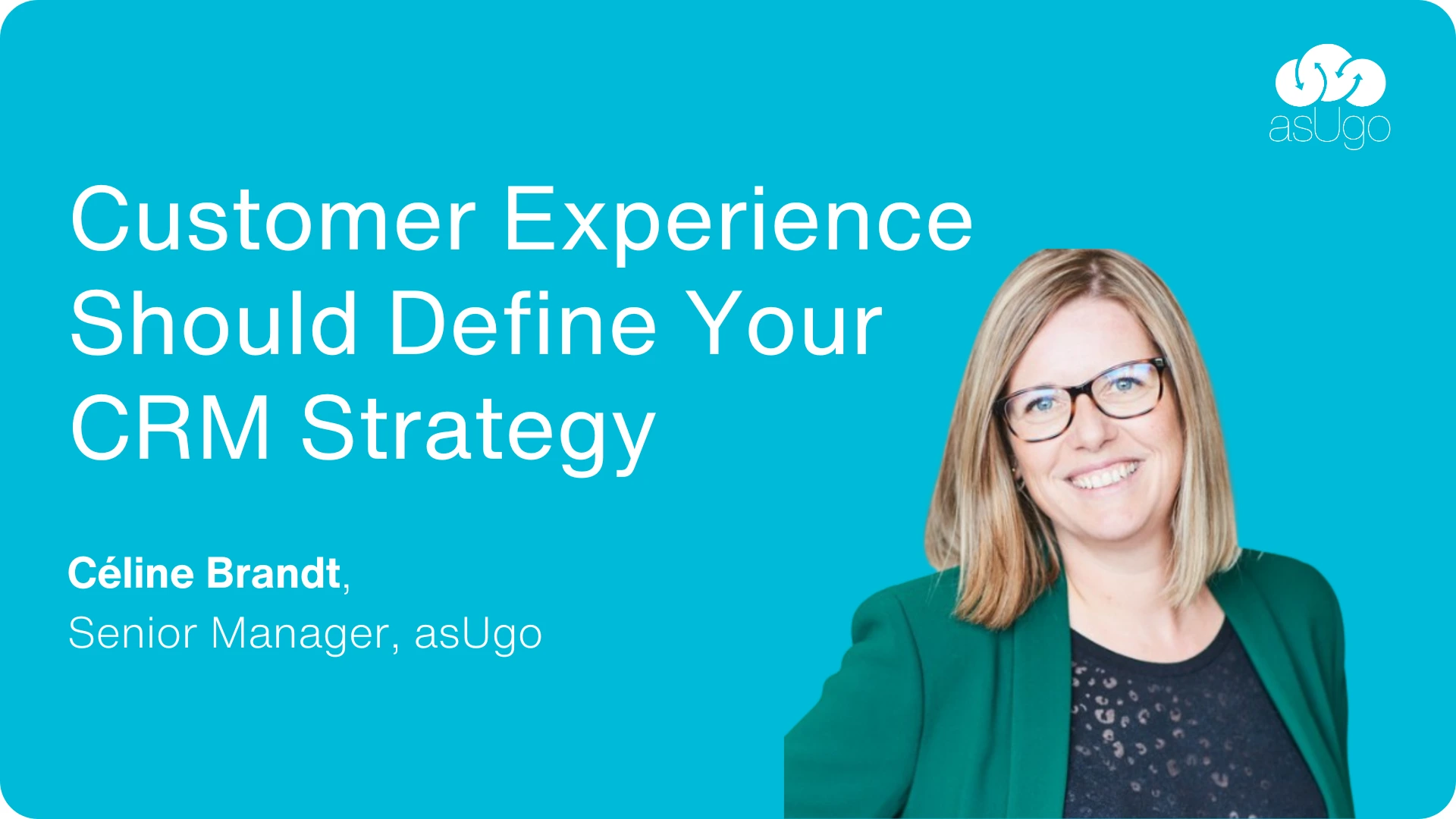
Author: Céline Brandt, Senior Manager, asUgo